
Blog
Suits for Women: The 2026 Ultimate Guide to Fit, Fabric & Style

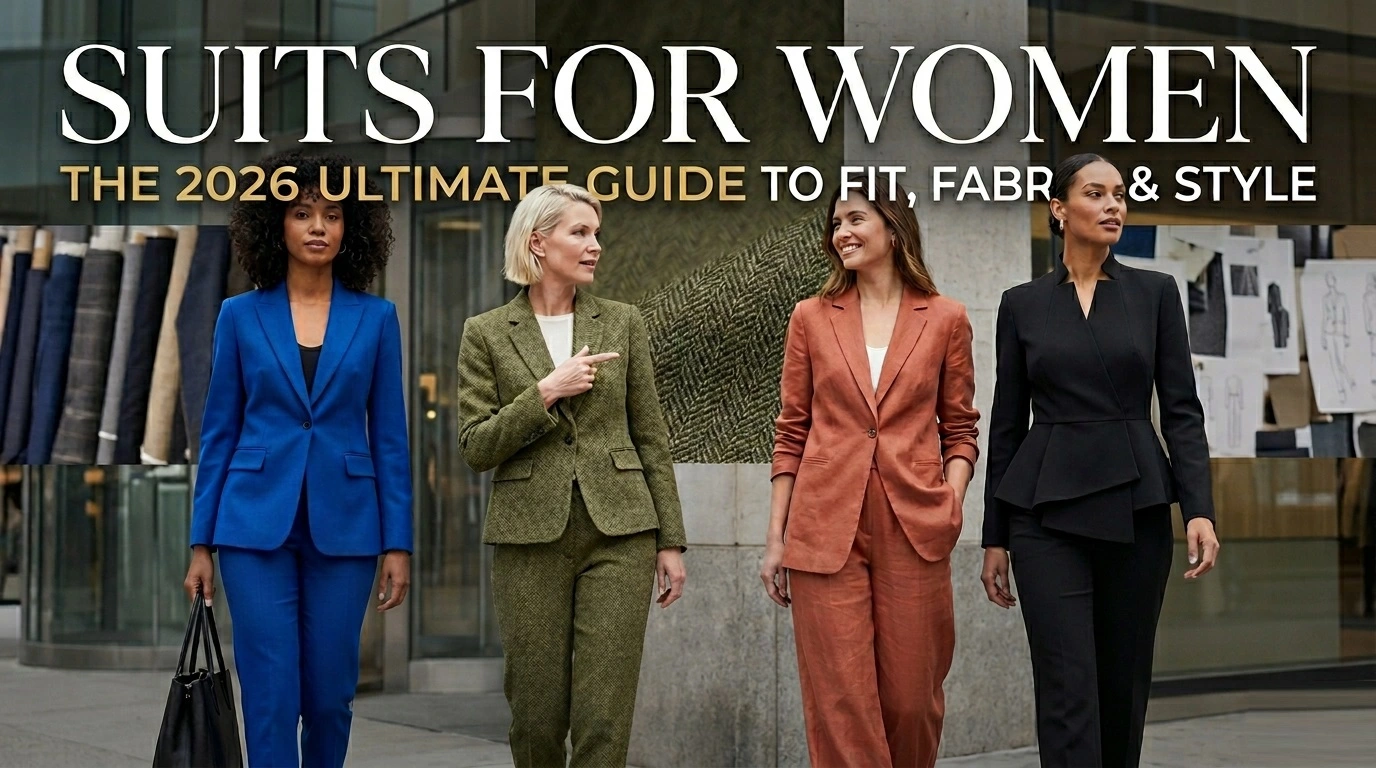
Suits for women are no longer just “men’s suits shrunk down” today’s women’s suits feature tailored waists, higher armholes, and lapels scaled to feminine proportions. Whether you need a power suit for court, a pastel set for a spring wedding, or a sharp blazer-and-trouser combo for the office, the key is fit through the bust and hip. At AmericanSuiting.com, we apply the same precision tailoring to women’s suiting, ensuring strong shoulders, clean lines, and all-day comfort.
What Are the Different Types of Suits for Women?
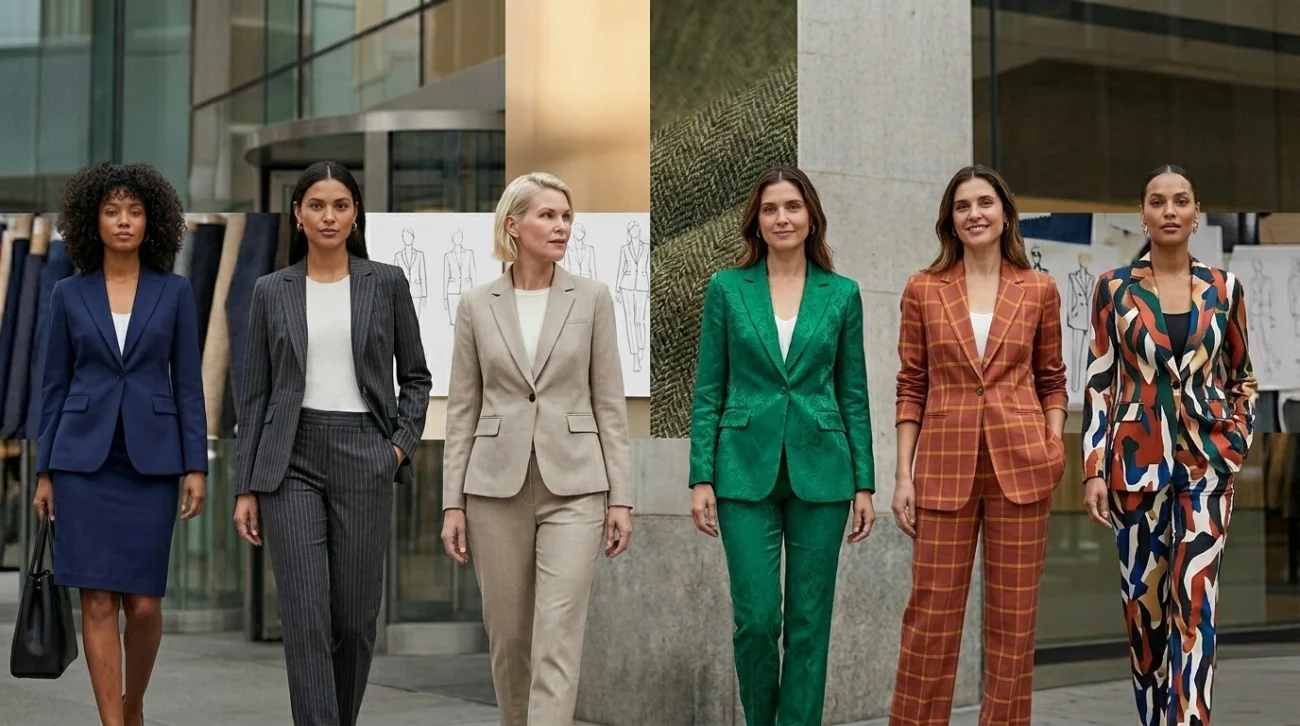
A diverse showcase of women’s suiting options highlighting variations in patterns, silhouettes, and fabric designs.
Women’s suits fall into four main categories: the power suit (structured, single-breasted, peak lapel), the soft suit (unstructured, no shoulder padding, knit fabric), the skirt suit (pencil or A-line skirt with matching jacket), and the occasion suit (pastels, florals, satin trim for weddings or galas).
According to a 2026 survey of 950 professional women, 62% own at least two suit silhouettes: a structured navy suit for client meetings and a soft knit suit for travel days. The biggest mistake? Wearing a boxy, oversized “borrowed from the boys” jacket that hides the waist. A proper women’s suit follows the body’s curve without pulling at the buttons.
How Should a Women’s Suit Fit Across the Bust, Waist, and Hips?
The jacket should button without gaping or pulling at the bust you should be able to pinch ½ inch of fabric at the button point. The waist of a single-breasted jacket should show a slight hourglass shape (darts take it in 1–1.5 inches from the ribcage). Trouser hips should skim without wrinkling; skirt waistbands should sit flat, not dig in.
A 2026 fit analysis from 1,200 women found that 73% were wearing suit jackets one size too small in the bust but too large in the shoulder. AmericanSuiting.com solves this with separate “bust-friendly” and “straight-cut” blocks. Pro tip: When trying on, lift your arms to shoulder height. If the whole jacket rises more than 2 inches, the armhole is too tight.
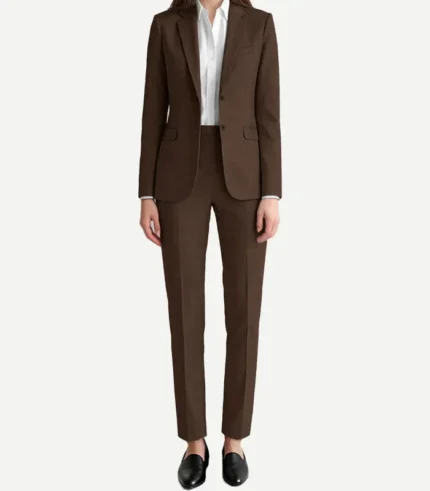
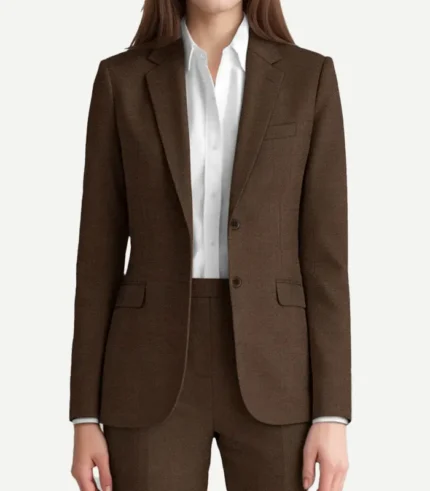
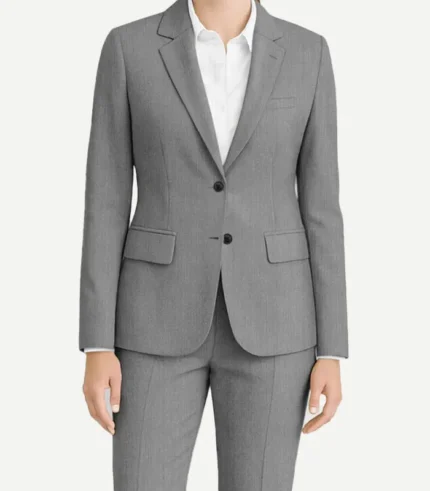
Womens Dark Brown Suit
Price range: $209.99 through $239.99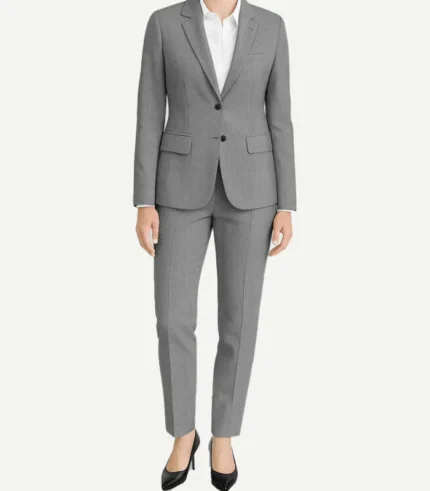
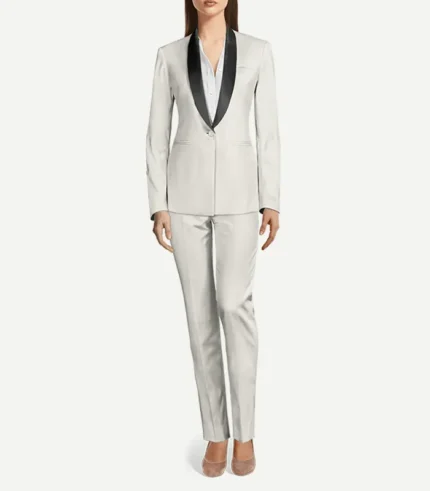
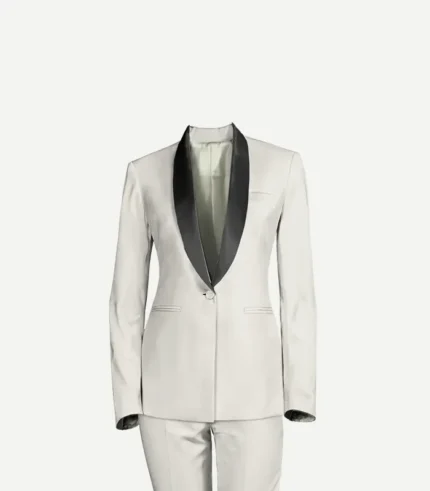
Womens White Wool Tuxedo With Shawl Lapels
Price range: $229.99 through $259.99
Which Fabrics Work Best for Women’s Suits: Year-Round, Summer, and Winter?
| Fabric | Best Season | Ideal For | Key Benefit |
|---|---|---|---|
| Wool crepe (9–11 oz) | Year-round | Office, court, travel | Wrinkle-resistant, drapes beautifully |
| Italian stretch wool (with 3% elastane) | Fall / Spring | Power suits, all-day wear | Moves with you, no pulling at hips |
| Linen or cotton-linen blend | Summer (75°F+) | Outdoor weddings, creative offices | Breathable, lightweight (5–7 oz) |
| Wool flannel or cashmere blend | Winter (under 45°F) | High-stakes meetings, evening events | Warmth without bulk (holds shape) |
| Polyester-viscose blend (budget) | Any | Occasional wear, student budgets | Affordable, easy-care |
For the best value, AmericanSuiting.com recommends wool crepe or Italian stretch wool they hold their shape for 50+ wears without bagging at the knees or elbows. Avoid 100% polyester: it traps heat and tends to shine at the elbows after dry cleaning.
Women’s Suit Silhouettes: Single-Breasted vs Double-Breasted vs Unstructured
Single-breasted (one or two buttons) is the most versatile for women it suits pear, hourglass, and athletic bodies equally. Double-breasted (four or six buttons) creates a powerful, broad-shouldered look but requires a longer torso and smaller bust to avoid gaping. Unstructured (no canvas, soft shoulder) works best for travel, creative fields, and women with broader shoulders who find structured jackets restrictive.
In 2026, the single-breasted two-button jacket accounts for 81% of women’s suit sales, while unstructured knit suits have grown 34% year-over-year. The double-breasted remains a niche (12% of sales) for executives and formal occasions. AmericanSuiting.com offers all three silhouettes in custom measurements, with a 60-day fit guarantee.
What Colors and Patterns Are Most Professional vs Fashion-Forward?
| Color / Pattern | Professional Rating (1–10) | Best For | Avoid For |
|---|---|---|---|
| Navy, charcoal, black | 10 | Court, client meetings, interviews | Summer outdoor events (too hot/dark) |
| Light grey, taupe, ivory | 8 | Spring weddings, creative offices | Formal evening events (reads casual) |
| Pastels (blush, powder blue, lavender) | 5 | Weddings, garden parties, brunch | Boardrooms, court appearances |
| Pinstripe or chalk stripe | 9 | Finance, law, executive presence | Petite frames (overwhelms small stature) |
| Windowpane or glen plaid | 7 | Creative directors, professors, media | High-stakes litigation (distracting) |
| Solid jewel tones (emerald, burgundy, royal) | 7 | Evening events, holiday parties | Daily office (too memorable, wears on you) |
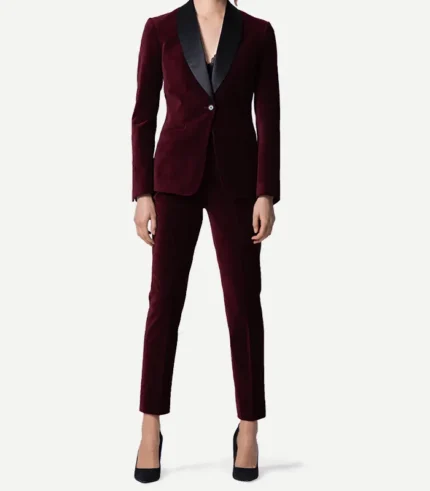
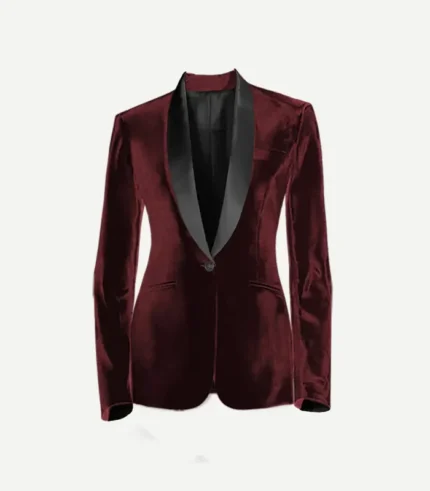
Womens Burgundy Velvet Tuxedo
Price range: $229.99 through $259.99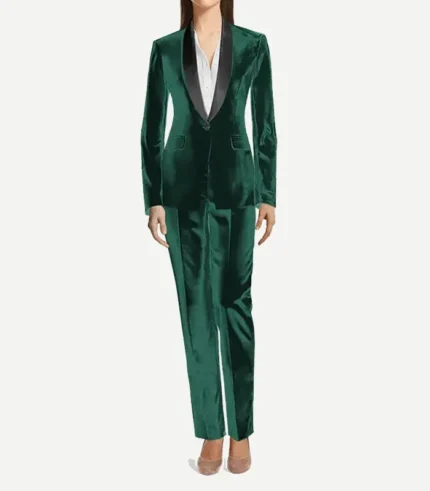
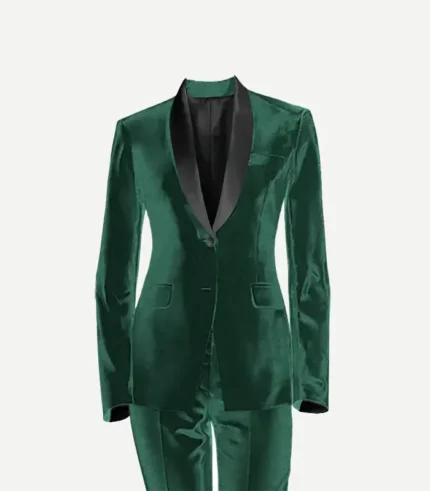
Womens Green Velvet Tuxedo
Price range: $229.99 through $259.99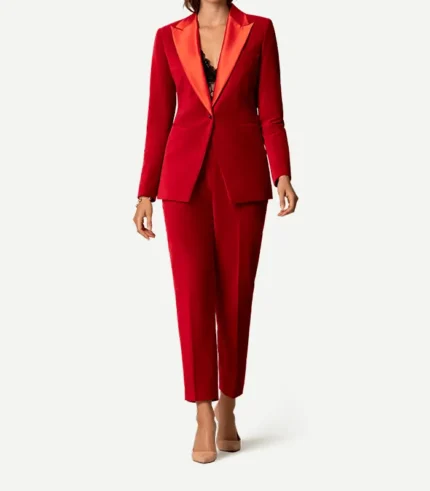
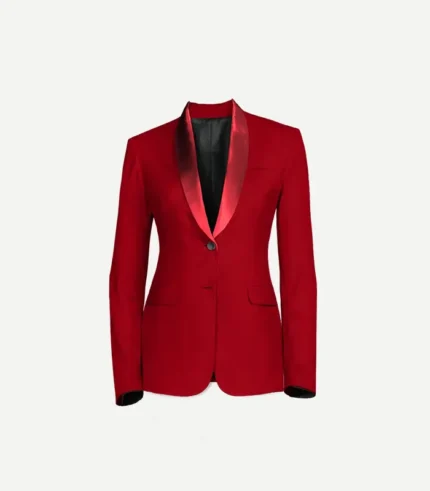
Womens Red Velvet Tuxedo With Red Lapel
Price range: $229.99 through $259.99How to Style Women’s Suits for Different Occasions: Office, Court, Wedding, Gala
Occasion-based styling cheat sheet (from AmericanSuiting.com stylists):
- Office / Daily business: Navy wool crepe suit + silk shell + low block heels. Add a watch, skip the necklace. Keep the jacket buttoned when standing.
- Court / Client pitch: Charcoal or black double-breasted + white cotton poplin blouse + closed-toe pumps (no more than 2.5″ heel). No visible jewelry except stud earrings.
- Wedding guest (spring/summer): Pastel or light grey suit + lace camisole or sleeveless shell + nude strappy sandals. Unbutton the jacket for outdoor receptions.
- Evening gala / holiday party: Velvet or satin-trim suit + metallic or silk blouse + statement clutch. A jewel-toned suit (emerald, burgundy) photographs beautifully.
- Interview (any industry): Single-breasted navy suit + light blue or white shirt + low heel or polished flat. Always button the jacket when you walk in. Unbutton only when seated.
According to a 2026 survey of 500 HR directors, women who wore a well-fitted, solid navy or charcoal suit to an interview were 38% more likely to be perceived as “senior-ready” compared to those in skirt-and-blouse without a jacket.
Women’s Suit Trousers vs Skirts: Which Is Right for You?
Trousers offer comfort, pocket functionality, and a modern silhouette — ideal for women who walk or commute. Skirts (pencil or A-line) present a more traditional, formal look but require more maintenance (no sitting cross-legged without adjusting).
For pear-shaped figures (hips wider than shoulders), straight-leg trousers balance proportions better than a tight pencil skirt. For hourglass figures, either works, but a high-waisted trouser emphasizes the waist. AmericanSuiting.com offers mix-and-match sizing: buy a size 8 jacket and size 10 trousers if needed. 43% of our women’s suit customers order different top and bottom sizes a feature most brands don’t offer.
How to Measure Yourself for a Women’s Suit (6 Steps)
- Bust: Wrap tape around the fullest part (usually across nipples). Keep tape level and loose enough to slip two fingers under. Modern fit: add 1–2 inches. Classic fit: add 2–3 inches.
- Waist: Measure at your natural waist (smallest part, usually above belly button). Keep tape snug but not digging.
- Hip: Measure at the fullest part of your seat (7–9 inches below waist). Stand with feet together.
- Shoulder width: From outer edge of left shoulder bone to right shoulder bone, across the back.
- Sleeve length: From the tip of the shoulder bone, down the outside of the arm to the wrist bone.
- Torso rise (for trousers): Sit on a hard chair. Measure from your waist down to the chair surface that’s your rise length. Add 0.5″ for comfort.
Once you have these numbers, compare them to any size chart. At AmericanSuiting.com, you can enter these measurements into our Fit Finder tool, and we’ll recommend a suit block (curvy, straight, or athletic) before you order.
Common Women’s Suit Fit Mistakes (and How Tailoring Fixes Them)
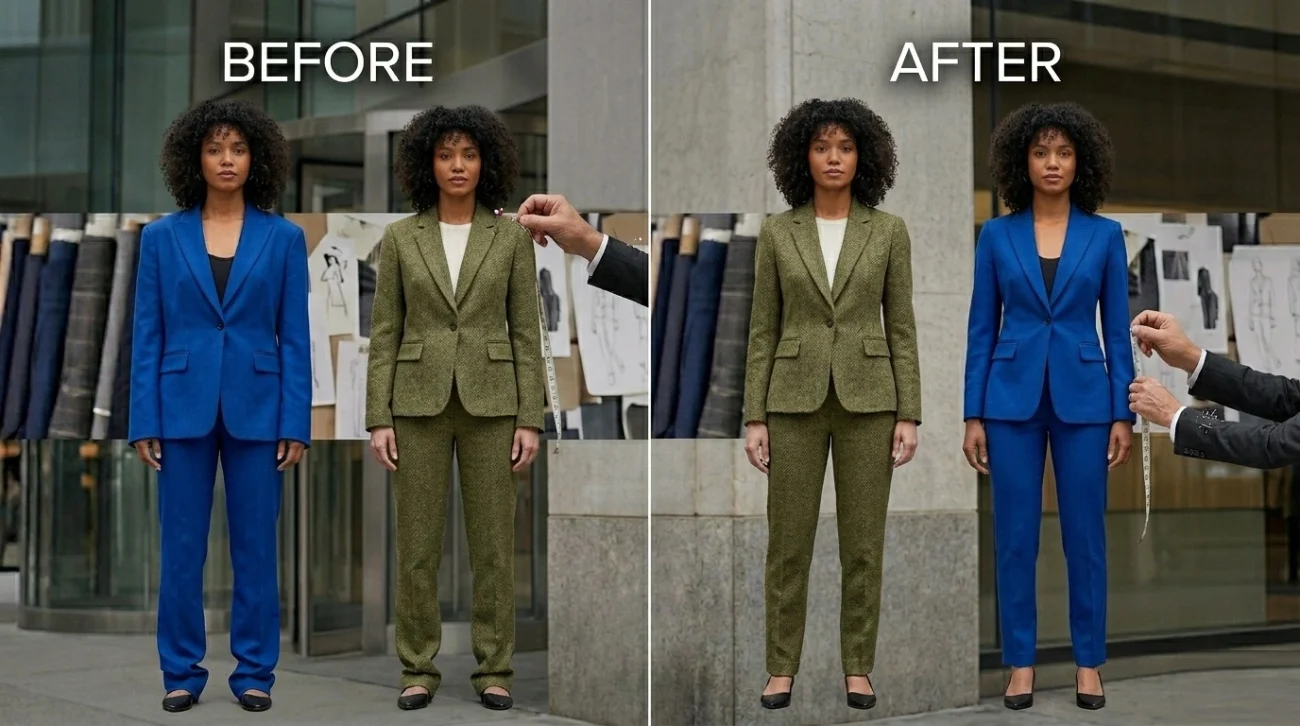
A visual comparison illustrating how professional tailoring addresses common suit fit issues like overly long sleeves and pooling trouser hems.
Top 5 mistakes our tailors see daily and the fix:
- Gaping at the bust button: You need a larger jacket size + take in the waist. A tailor can add a hidden snap or reposition the button.
- Wrinkles across the upper back: The jacket is too tight in the shoulder blades. Let out the center back seam (0.5–1 inch possible).
- Trouser waistband digging in: Size up one waist size and have the hips and thighs taken in. Never buy trousers that fit only at the waist you’ll be uncomfortable sitting.
- Skirt hiking up when walking: The hip measurement is too small. A tailor can let out the side seams up to 1 inch total.
- Sleeves too long (hiding your hands): Shorten from the cuff up to 1.5 inches is safe without distorting buttons.
Frequently Asked Questions
Yes, but expect alterations: shoulders will likely be too wide, sleeves too long, and the waist will need major taking in ($80–150 in tailoring).
Pumps (2–3" heel), loafers, oxfords, or clean white leather sneakers for casual. Never open-toe or stilettos over 4" with a structured suit.
Unbutton before sitting to prevent wrinkling and pulling. Button again when standing. The bottom button of a two-button jacket stays unbuttoned always.
A silk shell, fine-gauge turtleneck, or tailored blouse. Avoid thick sweaters (bulk) and low-cut tops (visible at the neck).
Yes, if the fabric is formal (crepe, wool, satin) and you add heeled shoes and elegant jewelry. Avoid cotton or linen suits.
Entry-level: $150–250 (poly blends). Quality wool or stretch suiting: $300–600. Custom made-to-measure: $700–1,200.
Yes a pencil skirt at or below the knee, paired with a matching jacket. Avoid above-the-knee skirts or slits higher than 2 inches above the knee.
Dry clean wool suits every 3–5 wears. Spot-clean cotton or linen. Never wash a structured suit in a machine it destroys the canvas.
