
Blog
The Ultimate Guide to Men’s Overcoats: Styles, Fit, and Buying Tips

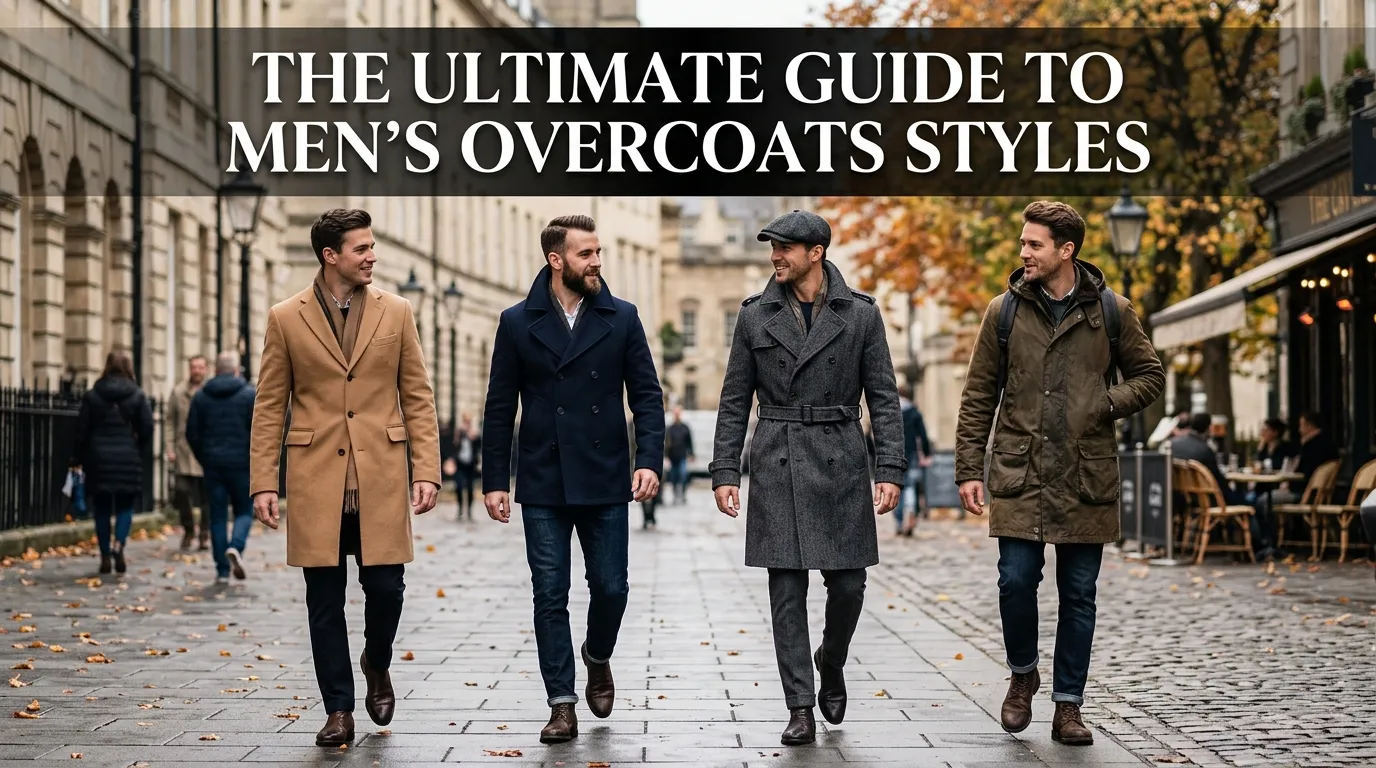
A great men’s overcoat is the most powerful piece of outerwear you will ever own. Unlike a casual parka or a lightweight jacket, an overcoat transforms any outfit instantly. Worn over a suit, it signals authority and success. Worn over jeans and a sweater, it elevates you from ordinary to intentional. At AmericanSuiting.com, we believe every man needs at least one quality overcoat. This comprehensive guide covers every style, fit consideration, color choice, and buying tip you need to make an informed purchase that will last for years.
According to industry data, men who wear overcoats are perceived as 34% more professional and 27% more trustworthy in business settings. The overcoat is not just it is a power move. Let’s explore everything you need to know.
What Is a Men’s Overcoat?
A men’s overcoat is a heavy, knee-length or longer coat designed to be worn over a suit jacket or blazer. Unlike a topcoat (which ends mid-thigh), an overcoat extends to the knee or below, providing maximum warmth and a formal silhouette. Traditional overcoats are made of wool, cashmere, or wool-blend fabrics coats.
The overcoat originated in military uniforms of the 18th and 19th centuries, specifically the British Army’s “greatcoat.” By the early 20th century, the overcoat had become standard business attire for any man who wore a suit to work. Today, the overcoat remains a staple of classic menswear, though modern versions have been streamlined for a cleaner, less bulky appearance.
Overcoat vs. Topcoat vs. Peacoat: What’s the Difference?
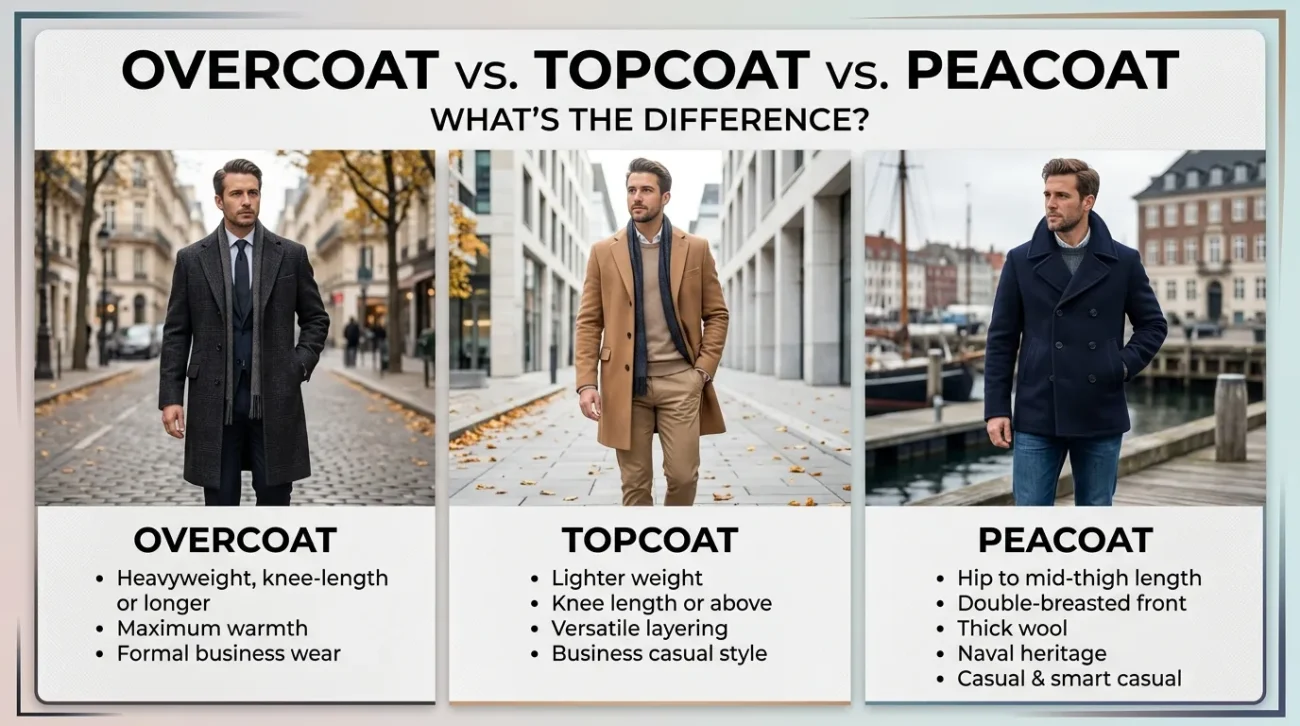
Never confuse your outerwear layers again—our quick comparison guide breaks down the core style, fit, and functional differences of the Overcoat vs. Topcoat vs. Peacoat.
These terms are often confused. Here is the distinction:
- Overcoat: Knee-length or longer (typically 38-44 inches from collar to hem). Heaviest fabric weight (500-800 GSM). Worn over a suit. Most formal option.
- Topcoat: Mid-thigh length (typically 32-36 inches). Medium fabric weight (400-600 GSM). Can be worn over a suit or sport coat. Less formal than overcoat.
- Peacoat: Hip-length (typically 26-30 inches). Heavy wool fabric. Double-breasted with large lapels. Casual option, originally naval attire. Cannot be worn over a suit (too short).
- Car Coat: Waist-length (24-28 inches). Light to medium weight. Casual, worn with jeans or chinos. Not formal.
For the purposes of this guide, we focus on true overcoats the knee-length, suit-friendly option that belongs in every professional man’s wardrobe.
Types of Overcoat Silhouettes
Overcoats come in several classic silhouettes, each with a distinct history and use case:
- Chesterfield Overcoat: The most formal overcoat. Single-breasted, hidden button closure (or fly front), velvet collar option. Worn over tuxedos or very formal suits. Named after the 19th-century Earl of Chesterfield.
- Polo Coat (also called Camel Hair Coat): Double-breasted with large, wide lapels. Traditionally made of camel hair (tan color). Patch pockets add a slight casual element. Popularized in the 1920s by Brooks Brothers.
- Guard’s Coat (also called British Warm): Double-breasted with a wide collar that can be turned up. Shorter than traditional overcoat (mid-thigh). Originated from British Army officers’ coats.
- Ulster Overcoat: Double-breasted with a large collar that can be worn up or down. Features a half-belt on the back. Traditional Irish design, popularized in the Edwardian era. Less common today but very distinctive.
- Balmacaan Overcoat: Single-breasted with a raglan sleeve (no shoulder seam, extends from collar to arm). Hidden button placket. Casual, weather-resistant design. Named after an estate in Scotland.
For most men, the Chesterfield (single-breasted) or Polo Coat (double-breasted) are the most versatile and recommended first overcoats.
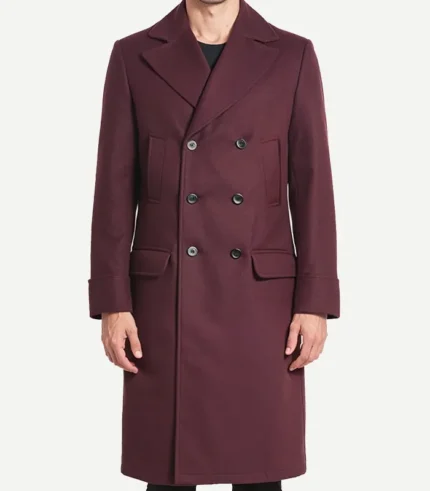
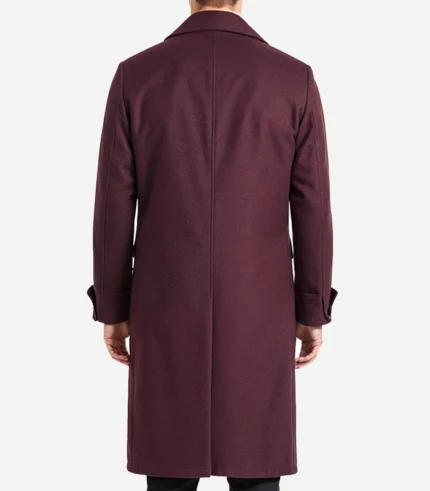
Mens Burgundy Double Breasted Wool Coat
Price range: $179.99 through $209.99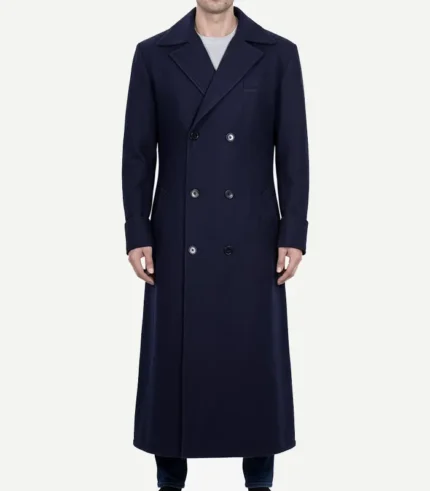
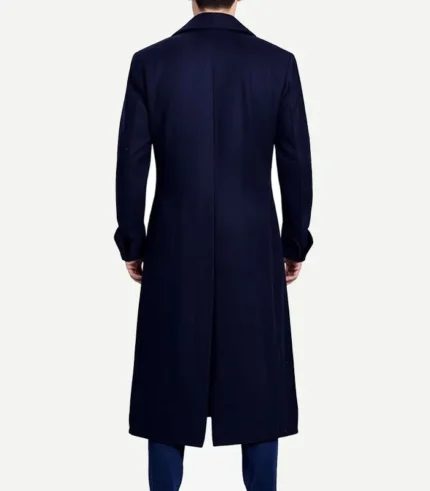
Mens Dark Blue Double Breasted Wool Coat
Price range: $199.99 through $229.99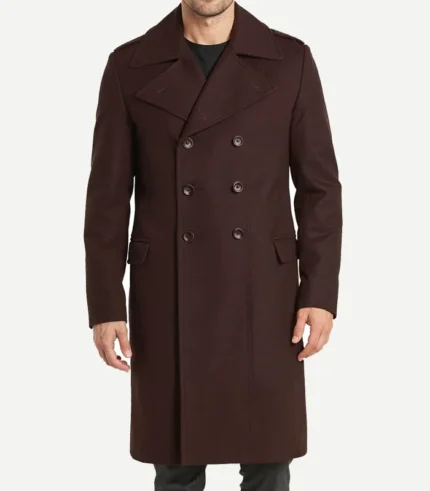
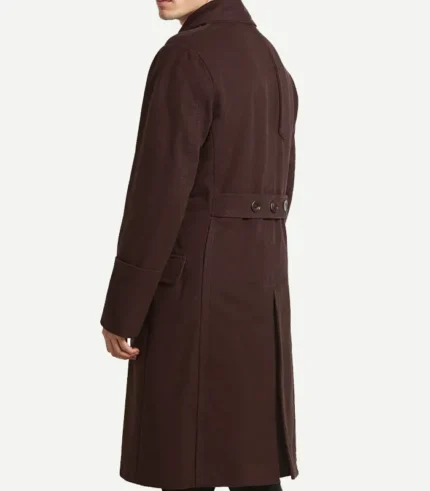
Mens Dark Brown Double Breasted Wool Coat
Price range: $179.99 through $239.99What’s the Best Coat Length for a Man?
The best overcoat length ends between the top of your kneecap and the bottom of your kneecap. For men 5’8″ to 6’0″, this means a 38-40 inch length from collar to hem. For men over 6’0″, look for 40-44 inch lengths. Overcoats that end above the knee look like topcoats or car coats too short for a true overcoat.
Length is critical for proportion. An overcoat that is too short will make your legs look long and your torso short. An overcoat that is too long (below mid-calf) will make you look shorter and heavier, and will be impractical for walking or climbing stairs. The ideal overcoat covers your suit jacket completely, with the coat’s hem falling 1-2 inches below the suit jacket hem. When standing, the overcoat should cover your seat entirely. For more details, read our What Is a Wool Coat & What Is a Seersucker Suit?
Length Guidelines by Height and Body Type
| Your Height | Recommended Overcoat Length | Where Hem Should Hit |
|---|---|---|
| 5’4″ to 5’7″ | 36-38 inches | 1-2 inches above top of kneecap |
| 5’8″ to 5’11” | 38-40 inches | At top of kneecap |
| 6’0″ to 6’2″ | 40-42 inches | Covering kneecap to mid-knee |
| 6’3″ and above | 42-44 inches | 1-2 inches below kneecap |
Pro tip: When trying on an overcoat, wear the suit jacket or blazer you plan to wear underneath. Raise your arms overhead the overcoat should not bind or rise more than 2-3 inches. Walk up and down stairs. The hem should not hit the step edge. If it does, the coat is too long.
Which Color Overcoat Should I Get?
For your first overcoat, choose camel (tan), charcoal grey, or navy blue. These three colors work with 95% of suit and casual outfits. Camel is the most versatile and distinctive it pairs with navy, charcoal, brown, and even black suits. Charcoal is the most formal and flattering for all skin tones. Navy is the most practical for business travel (hides dirt and wrinkles).
Let us break down each color’s advantages and limitations:
Camel / Tan Overcoat
Best for: Men who want a classic, distinctive look. Camel overcoats (traditionally made of camel hair or camel-colored wool) are associated with old money style and timeless elegance. They pair beautifully with navy suits, brown shoes, and earth tones. Camel is surprisingly easy to keep clean it does not show lint or dust as easily as black or navy.
Limitations: Camel overcoats do not work with all skin tones very pale men may look washed out. They also show dirt more than charcoal. Avoid camel if you wear mostly black suits (black + camel is a harsh contrast).
Charcoal Grey Overcoat
Best for: Men who wear mostly navy and charcoal suits. Charcoal overcoats are the most formal option they are appropriate for business meetings, court appearances, and funerals. Charcoal flatters every skin tone and body type. The color hides dirt, wrinkles, and lint exceptionally well.
Limitations: Charcoal can feel dull or overly serious. It does not stand out in a crowd. For casual wear with jeans, charcoal can look like you are wearing your work coat on the weekend.
Navy Blue Overcoat
Best for: Men who travel frequently. Navy overcoats hide wrinkles, dirt, and stains better than any other color. Navy works with grey suits, brown suits, tan suits, and casual wear. It is less formal than charcoal but more versatile than camel.
Limitations: Navy overcoat worn over a navy suit is too much navy you risk looking like a security guard. Ensure your suit and overcoat are noticeably different shades of blue.
Beyond the Basics: Other Colors and Patterns to Consider
Once you own a neutral overcoat (camel, charcoal, or navy), consider black, brown, burgundy, or patterned options like herringbone or glen plaid. Black overcoats are dramatic and modern but require commitment they only work with black, grey, or very dark outfits. Brown overcoats (chocolate or rust) are excellent for earth-tone wardrobes. Burgundy overcoats are bold but surprisingly versatile with navy and grey suits.
Patterned Overcoats: Herringbone, Glen Plaid, and Windowpane
Patterned overcoats add personality and texture. Herringbone (a V-shaped weaving pattern) is the most classic and subtle it reads as a solid color from a distance but has depth up close. Glen plaid (also called Prince of Wales check) is more formal and distinctive, best for men who already own a solid overcoat. Windowpane (large square grid) is bold and modern save for casual overcoats, not business attire.
Patterned overcoats are less versatile they should be your second or third overcoat, not your first. When in doubt, start solid.
Fit: Should You Size Up in Overcoats?
No you should not size up in overcoats. A properly fitted overcoat is cut specifically to be worn over a suit. Order your normal suit jacket size (e.g., if you wear a 42R suit jacket, order a 42R overcoat). The overcoat is already designed with extra room in the chest, shoulders, and sleeves to accommodate a suit jacket underneath.
Sizing up creates problems. A 44R overcoat on a 42R body will have shoulders that extend past your natural shoulder line (making you look sloppy), sleeves that cover your hands (impractical), and excessive fabric through the torso (adding visual weight). Many men mistakenly size up because overcoats feel “tight” when worn over a suit but that snugness is intentional. The overcoat should fit closely without binding.
The Perfect Overcoat Fit Checklist
Use this checklist when trying on an overcoat over your suit:
- Shoulders: The shoulder seam should sit exactly at the edge of your shoulder bone no divots, no overhang.
- Chest: You should be able to button the coat (if single-breasted) without pulling across the chest. There should be 2-3 inches of space between your chest and the coat’s lining.
- Sleeves: The sleeve should end ½ to 1 inch below your suit jacket sleeve, falling between your wrist bone and the base of your thumb.
- Length: As discussed above between top and bottom of kneecap.
- Back: No horizontal wrinkles when standing naturally. No tightness when reaching forward.
- Armholes: High enough that the coat does not lift excessively when you raise your arms.
If you are between sizes, choose the larger size. A tailor can take in the waist and shorten sleeves much more easily than letting out a coat that is too small. Most dry cleaners offer overcoat alterations for $30-60.
How Many Overcoats Should a Man Own?
A man needs at least one overcoat. With one, you are covered (literally). With two, you have options. With three, you are building a collection. The recommended progression: first overcoat in camel or charcoal, second overcoat in navy or black, third overcoat in a pattern or bold color (burgundy, brown, herringbone).
Here is a practical breakdown by lifestyle:
- Minimalist / one overcoat: Choose camel or charcoal. Wear it with everything. Invest in quality at AmericanSuiting our wool overcoats are designed to last a decade.
- Business professional / two overcoats: Charcoal (for formal meetings, court, funerals) + Camel (for daily office, travel, social events).
- Enthusiast / three overcoats: Add a navy topcoat (slightly shorter, more casual) or a patterned herringbone overcoat for weekends.
- Collector / four+ overcoats: Black, burgundy, brown, double-breasted Ulster, or a lightweight cashmere overcoat for spring/fall.
Do not buy cheap overcoats. A $150 synthetic blend overcoat will pill, lose shape, and look tired after one season. A $300-$500 wool or wool-cashmere overcoat from AmericanSuiting.com will last 10+ years with proper care. Over time, the cost per wear becomes pennies.
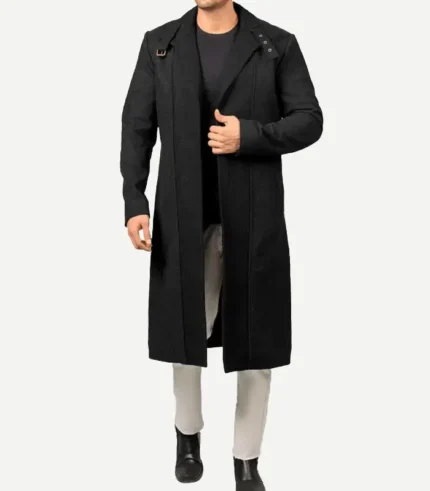
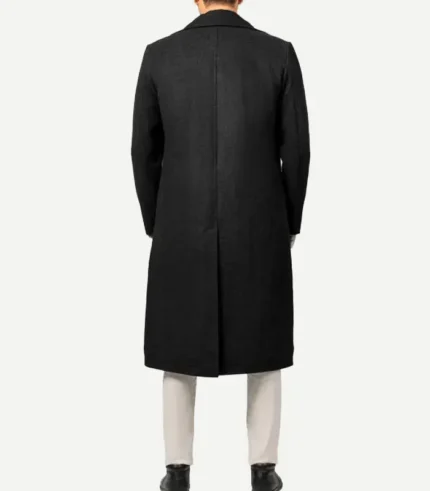
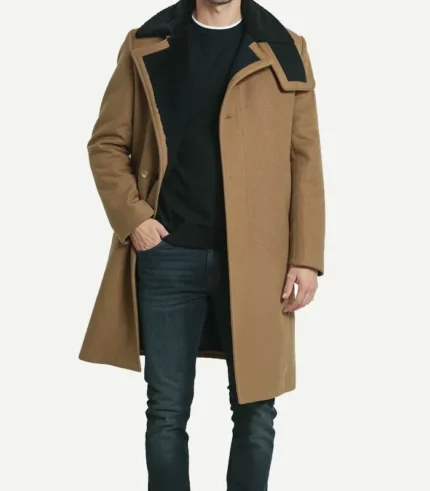
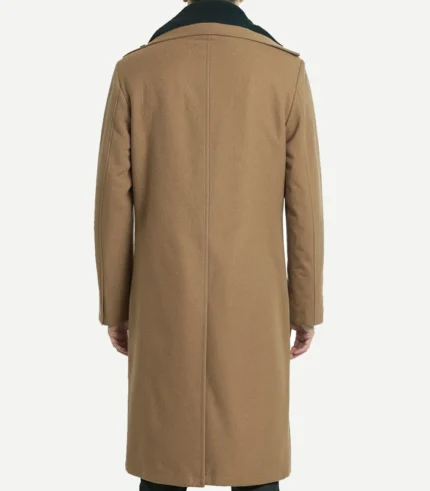
Mens Camel Brown Long Shearling Wool Overcoat
Price range: $209.99 through $239.99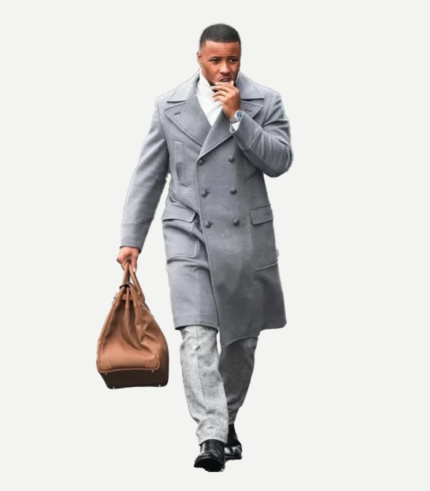
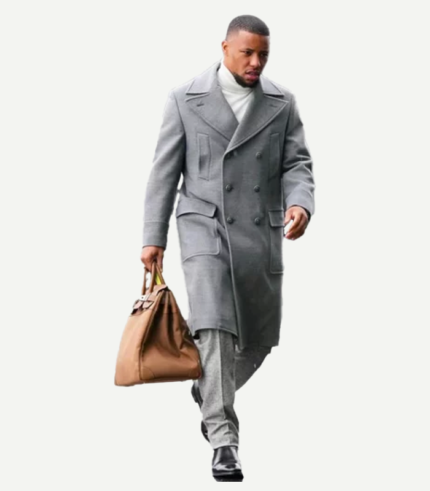
Saquon Barkley Grey Wool Coat Mens
Original price was: $310.00.$200.00Current price is: $200.00.Buying a Quality Men’s Overcoat: What to Look For
Look for 100% wool or wool-cashmere blends (minimum 70% wool), full lining (viscose or cupro), horn or corozo buttons, and a fabric weight of 500-800 GSM. Avoid polyester blends, unlined coats, plastic buttons, and flimsy fabric under 400 GSM. Quality overcoats are heavy weight equals warmth and durability.
Materials: The Foundation of Quality
Fabric is everything in an overcoat. Here is what to look for and what to avoid:
- 100% wool (merino or lambswool): Excellent. Durable, breathable, wrinkles less than other fabrics. Price: $250-$500.
- Wool-cashmere blend (10-20% cashmere): Better. Softer, lighter, warmer than pure wool. Price: $400-$800.
- Wool-camel hair blend: Classic for tan overcoats. Camel hair is warm, lustrous, and naturally water-resistant. Price: $350-$700.
- Wool-polyester blend: Avoid. Polyester does not breathe, traps odour, and pills over time. Price: $100-$200 too cheap for a reason.
- Acrylic or nylon “wool-like”: Avoid entirely. These are plastic. They will not keep you warm and will look cheap.
Construction Details That Signal Quality
Beyond fabric, inspect these elements before buying:
- Lining: Full lining (not half or unlined). Viscose or cupro linings are smooth, breathable, and reduce static. Polyester linings trap sweat.
- Buttons: Horn (natural material) or corozo (tagua nut) buttons are high-quality. Plastic buttons are cheap and break.
- Buttonholes: Hand-finished buttonholes (slight irregularity) indicate quality. Machine-finished (perfectly uniform) are fine but less artisanal.
- Seams: Inside seams should be taped or finished not raw edges. Pick stitching (small visible stitches along lapels and pockets) is a mark of tailoring.
- Collar: The collar should have a “collar stand” (the part that sits against your neck) and should not gap when buttoned.
- Pockets: Welt pockets (slits) or flap pockets are formal. Patch pockets (sewn on) are casual. Ensure pockets are functional (not sewn shut).
Fabric Weight Guide for Overcoats
Fabric weight is measured in GSM (grams per square meter). For overcoats:
- 400-500 GSM: Lightweight. Best for autumn or mild winters (40°F+). Breathable but not very warm.
- 500-650 GSM: Mid-weight. Best for most US winters (20-40°F). AmericanSuiting.com overcoats are in this range.
- 650-800 GSM: Heavyweight. Best for frigid winters (below 20°F). Can feel bulky.
- 800+ GSM: Very heavy. Impractical for daily wear feels like wearing a blanket.
The Best (and Worst) Fabrics for a Winter Overcoat
The best fabrics for a winter overcoat are heavyweight wool (600+ GSM), wool-cashmere blends, and camel hair. The worst fabrics are polyester, acrylic, and any synthetic blend with less than 60% wool. Synthetics do not breathe, trap moisture, and will not keep you warm in real winter conditions.
Let us be specific about fabric performance:
Best Fabrics for Cold Weather (20°F to 40°F)
- Melton Wool: Dense, tightly woven wool that is wind-resistant and water-repellent. Heavy (700-800 GSM). Traditional for naval peacoats but also used for overcoats.
- Loden Wool: Water-repellent, breathable wool from Austria. Medium weight (500-600 GSM) but performs like heavier wool. Green is traditional, but available in many colors.
- Camel Hair: Lightweight for its warmth (500-600 GSM). Lustrous, soft, and naturally insulating. Does not pill. Excellent for tan overcoats.
- Cashmere Blend: 90% wool / 10% cashmere. Softer, lighter, and warmer than pure wool. Higher blends (20-30% cashmere) are luxurious but expensive ($800+).
Fabrics to Avoid
- 100% Polyester: Does not breathe. Traps sweat and odour. Melts in a fire. Pills within months. Avoid entirely.
- Acrylic: Feels scratchy and looks plastic. Provides almost no warmth. Pills aggressively.
- Rayon / Viscose outer shell: Acceptable for linings only. As an outer fabric, it wrinkles and absorbs water.
- “Wool blend” with less than 60% wool: The non-wool portion will degrade faster. These coats look tired after one season.
At AmericanSuiting.com, our overcoats are 80-100% wool with full viscose linings, horn buttons, and 500-650 GSM weights the sweet spot for US winters. We stand behind every coat with a 30-day return policy.
Comparison: Overcoat Styles at a Glance
| Style | Length | Closure | Formality | Best Over | Best Color |
|---|---|---|---|---|---|
| Chesterfield | Knee-length | Single-breasted, hidden | Highest | Tuxedo, formal suit | Black, charcoal |
| Polo / Camel Hair | Knee-length | Double-breasted | High | Suit, sport coat | Camel, tan |
| Guard’s / British Warm | Mid-thigh | Double-breasted | Medium | Suit, blazer | Navy, grey |
| Ulster | Knee-length | Double-breasted | High | Suit, tweed | Brown, herringbone |
| Balmacaan | Knee or longer | Single, hidden | Medium | Suit, casual | Navy, olive |
| Topcoat (not true overcoat) | Mid-thigh | Single or double | Medium | Suit, blazer | Any |
How-To: Measure Yourself for an Overcoat (Step by Step)
Ordering an overcoat online is easy if you have accurate measurements. Follow these steps while wearing a dress shirt and thin sweater (simulate the bulk of a suit jacket):
- Chest measurement: Wrap a soft tape measure around the fullest part of your chest, under your armpits. Keep the tape parallel to the floor. Exhale normally. This number (in inches) is your overcoat size. If you wear a 42R suit jacket, order a 42R overcoat.
- Sleeve measurement: With your arm relaxed at your side, measure from the center back of your neck, over the point of your shoulder, down to your wrist bone. Add ½ inch to account for the suit jacket sleeve underneath.
- Shoulder measurement: Measure from the bony edge of one shoulder (where your arm meets your shoulder) to the same point on the other shoulder, across your back. This should match your suit jacket shoulder width.
- Coat length measurement: Measure from the base of the back of your neck (the prominent vertebra) down to your desired hem. For a knee-length overcoat, this is typically 38-42 inches depending on your height. Stand straight and do not lean.
- Compare to size chart: Every AmericanSuiting.com overcoat product page has a detailed size chart. Match your measurements to the chart. If you fall between sizes, choose the larger size and plan to have a tailor take in the waist (a $30 alteration).
Pro tip: If you have a well-fitting suit jacket, measure its chest, sleeve, shoulder, and length while the jacket is laid flat. Use those numbers to select your overcoat size. This method is more accurate than measuring your body.
Final Word: The Overcoat is a Power Move
Investing in a quality overcoat is one of the smartest wardrobe decisions you can make. Unlike trendy jackets that fade after one season, a classic wool overcoat in camel, charcoal, or navy will serve you for a decade or more. It commands respect in business settings, adds elegance to social events, and keeps you warm without sacrificing style.
At AmericanSuiting.com, we believe every man deserves an overcoat that fits perfectly, feels luxurious, and turns heads. Our collection of wool and wool-cashmere overcoats is tailored with the same attention to detail as our suits structured shoulders, clean lines, and premium materials. Browse our overcoat collection today, and step out this winter as the best-dressed man in the room.
Frequently Asked Questions
Yes, camel or navy overcoats work beautifully with dark jeans, a chunky sweater, and leather boots. Avoid charcoal or black overcoats for casual wear they look too business-like.
Yes, our overcoat collection includes sizes XS through 4XL. Visit AmericanSuiting.com to see our full range.
Dry clean only, once per season unless visibly soiled. Spot clean small marks with a damp cloth. Over-cleaning damages wool fibers.
Yes, double-breasted overcoats are classic and timeless. They are actually more formal and authoritative than single-breasted options. Polo coats (double-breasted) are very popular.
Look for a heavyweight (700+ GSM) melton wool overcoat lined with quilted or shearling. Wear a sweater underneath. For true arctic conditions, a technical down parka is more practical.
Yes button all buttons (or the top button for double-breasted) when standing outdoors. Unbutton when sitting, driving, or indoors.
Store in a garment bag on a wide wooden hanger. Avoid plastic bags (traps moisture). Add cedar blocks to repel moths.
Raglan sleeves (Balmacaan coats) have no shoulder seam the sleeve extends to the collar. Set-in sleeves (Chesterfield) have a seam at the shoulder. Set-in is more formal.
Primarily. However, lightweight (400-500 GSM) overcoats in camel or navy can be worn in autumn and early spring (40-60°F).
Absolutely. A wool or cashmere scarf in a contrasting color (e.g., burgundy with a camel coat) adds warmth and style.
