
Blog
Peacoat vs. Overcoat: The Ultimate Men’s Winter Coat Comparison (2026)

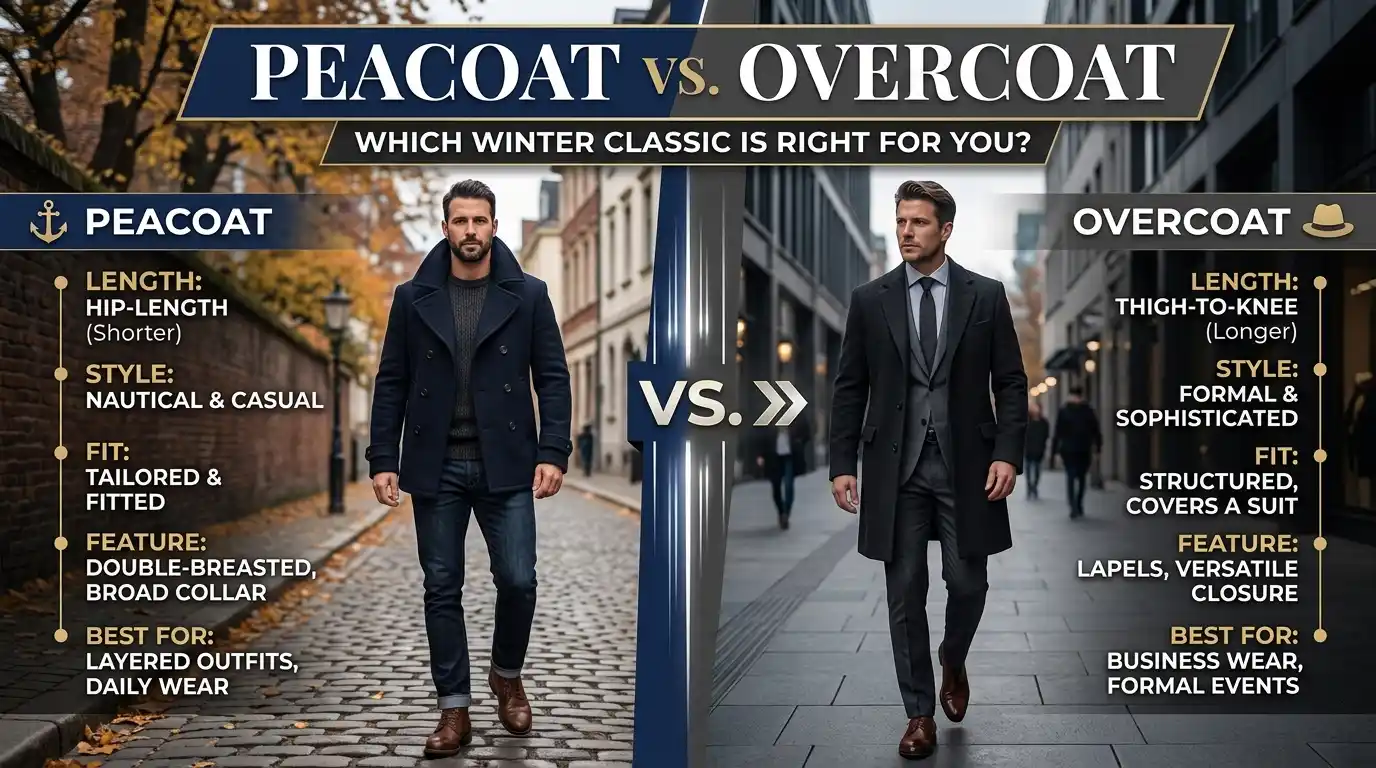
Choosing between a peacoat vs. overcoat is one of the most common winter wardrobe dilemmas men face. Both are classic wool coats that have stood the test of time. Both keep you warm and look sharp. But they serve very different purposes. The peacoat is shorter, more casual, and rooted in naval history. The overcoat is longer, more formal, and designed to be worn over a suit. At AmericanSuiting.com, we carry both styles, and this guide will help you decide which one belongs in your closet or if you need both.
According to style experts, the right winter coat can elevate your entire cold-weather wardrobe. But the wrong one will leave you either over-dressed or under-prepared. Let’s break down every difference: length, warmth, formality, fit, history, and price. By the end, you’ll know exactly which coat to buy for your lifestyle.
1. What Is a Peacoat? Definition and History
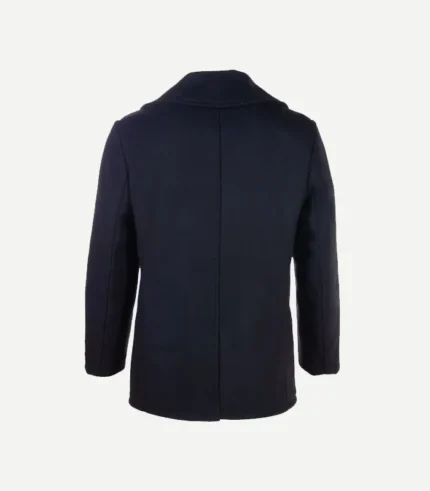
A peacoat is a short, double-breasted wool coat that ends at the hip or upper thigh. Originally worn by European and American naval officers, it features wide lapels, large buttons, and a heavy wool construction. The modern peacoat is a casual-to-smart-casual winter staple.
The name “peacoat” likely comes from the Dutch word “pijjakker” “pij” meaning coarse wool and “jakker” meaning jacket. The coat was adopted by the US Navy in the late 19th century and became standard issue for sailors. The classic peacoat is made of heavy melton wool (600-800 GSM), has a double-breasted front with six to eight buttons, and features wide notch lapels that can be turned up for weather protection.
Today, the peacoat has moved beyond military use. It’s a favorite for men who want a warm, durable, and stylish winter coat that works with jeans, chinos, and casual trousers. However, the peacoat is rarely appropriate over a suit or blazer it’s simply too short.
Key Peacoat Characteristics
- Length: Hip to upper thigh (26-30 inches from collar to hem)
- Closure: Double-breasted (two rows of buttons)
- Lapels: Wide, notch lapels that can be turned up
- Pockets: Vertical welt pockets or side-entry pockets
- Fabric: Heavy melton wool (600-800 GSM)
- Formality: Casual to smart-casual
- Best worn over: Sweaters, henleys, casual button-downs, t-shirts
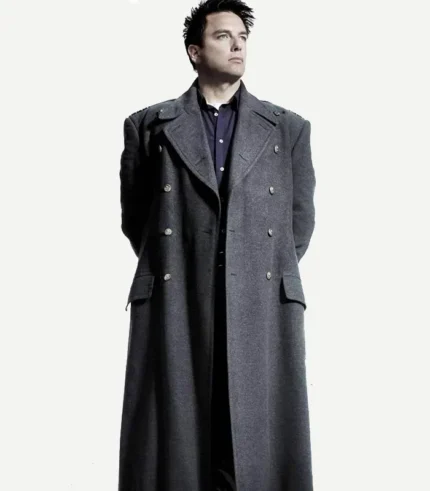
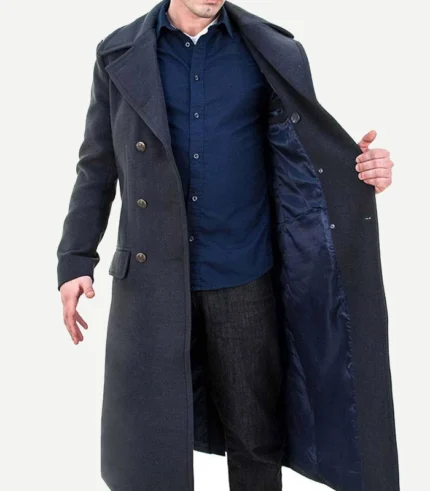
Captain Jack Trench Coat
Original price was: $310.00.$200.00Current price is: $200.00.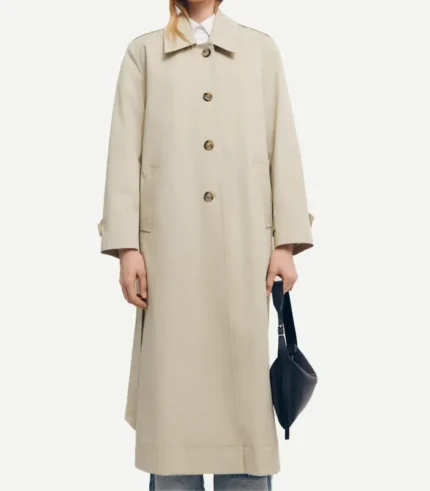
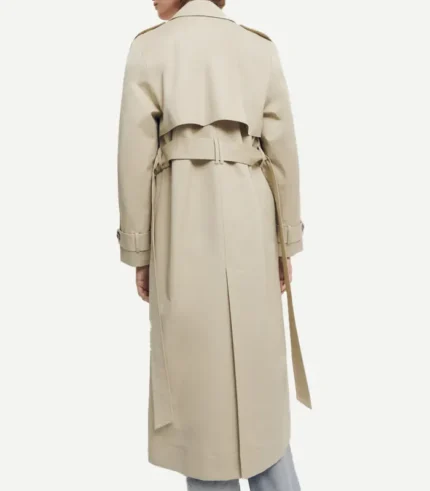
Cotton Trench Coat With Shirt Collar
Price range: $199.99 through $229.99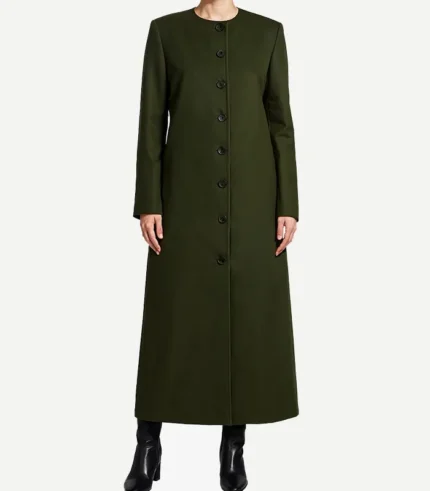
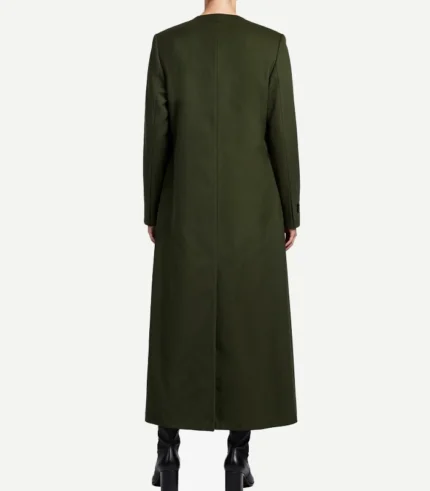
Womens Olive Green Long Wool Coat
Price range: $199.99 through $229.992. What Is an Overcoat? Definition and History
An overcoat is a long, knee-length or longer wool coat designed to be worn over a suit or sport coat. It is the most formal winter coat option, signaling authority and sophistication. Traditional overcoats include the Chesterfield, Ulster, and Polo coat styles.
The overcoat evolved from the military “greatcoat” of the 18th and 19th centuries. By the early 1900s, it had become standard business attire for any man who wore a suit to work. Unlike the peacoat, the overcoat is intentionally cut longer and roomier specifically to accommodate a suit jacket or blazer underneath without wrinkling or binding.
The most formal overcoat is the Chesterfield, characterized by a single-breasted front, hidden button closure (or fly front), and often a velvet collar. The Polo coat (camel hair) is double-breasted with wide lapels. The Ulster has a large collar and half-belt on the back. At AmericanSuiting.com, our overcoats are designed for the modern professional knee-length, structured shoulders, and premium wool fabrics.
Key Overcoat Characteristics
- Length: Knee-length or longer (38-44 inches from collar to hem)
- Closure: Single or double-breasted
- Lapels: Peak or notch lapels, often with a velvet collar option (Chesterfield)
- Pockets: Welt or flap pockets
- Fabric: Medium to heavy wool (500-800 GSM), often with cashmere blends
- Formality: Formal to semi-formal
- Best worn over: Suits, sport coats, blazers, dress shirts
3. Length Comparison: Where Does Each Coat End?
The most visible difference between a peacoat and overcoat is length. A peacoat ends at your hip or upper thigh typically 26 to 30 inches from collar to hem. An overcoat ends at or below your knee typically 38 to 44 inches from collar to hem. That’s a 10-15 inch difference that changes the entire silhouette.
Length dictates formality and practicality. A shorter peacoat allows easier movement, better for driving or sitting at a desk. But it doesn’t cover your suit jacket. If you wear a peacoat over a blazer, the blazer’s hem will stick out a distinctly mismatched look. An overcoat, by contrast, completely covers your suit jacket. When buttoned, the overcoat creates a clean, continuous line from shoulder to hem.
Length Guidelines by Height
| Your Height | Peacoat Length (inches) | Overcoat Length (inches) |
|---|---|---|
| 5’6″ to 5’9″ | 26-28″ (hits lower hip) | 38-40″ (hits above knee) |
| 5’10” to 6’1″ | 28-30″ (hits upper thigh) | 40-42″ (hits at knee) |
| 6’2″ and above | 30-32″ (hits mid-thigh) | 42-44″ (hits below knee) |
4. Warmth and Weather Protection: Which Is Warmer?
A heavy wool peacoat (700-800 GSM) is generally warmer than a standard overcoat (500-650 GSM) because peacoats use denser, heavier fabric. However, an overcoat worn over a suit jacket and vest can be equally warm thanks to the added layers underneath. For extreme cold (below 20°F), an overcoat plus layering is superior.
The peacoat’s advantage is its dense melton wool, which is tightly woven and naturally wind-resistant. The double-breasted front also adds an extra layer of fabric across your chest. Sailors wore peacoats in freezing North Atlantic conditions they’re genuinely warm.
The overcoat’s advantage is length. A knee-length overcoat protects your thighs an area peacoats leave exposed. Additionally, because overcoats are designed to fit over suit jackets, you can layer more underneath. A wool suit jacket plus a wool overcoat is very warm. At AmericanSuiting.com, we recommend our 650 GSM overcoats for most US winters.
5. Formality: When to Wear Each Coat
Overcoats are formal appropriate for business meetings, weddings, funerals, and any event where you’d wear a suit. Peacoats are casual to smart-casual appropriate for weekends, dates, travel, and casual offices. Never wear a peacoat to a black-tie or formal business event.
Let’s be specific about occasions:
Overcoat Occasions (Formal)
- Business meetings – Especially with clients or senior leadership
- Weddings – As a guest or groomsman (over your suit)
- Funerals – The most respectful outerwear choice
- Court appearances
- Opera, theater, galas – Any evening formal event
- Job interviews – Particularly for professional roles (law, finance, consulting)
Peacoat Occasions (Casual to Smart-Casual)
- Weekend errands – Over jeans and a sweater
- Casual dates – Dinner or drinks
- Travel – Comfortable for planes and trains
- Casual office (dress code permitting) – Over chinos and an Oxford shirt
- Outdoor winter activities – Walking, shopping, sightseeing
- College or graduate school
Read our detailed guide: The Ultimate Guide to Men’s Overcoats: Styles, Fit, and Buying Tips
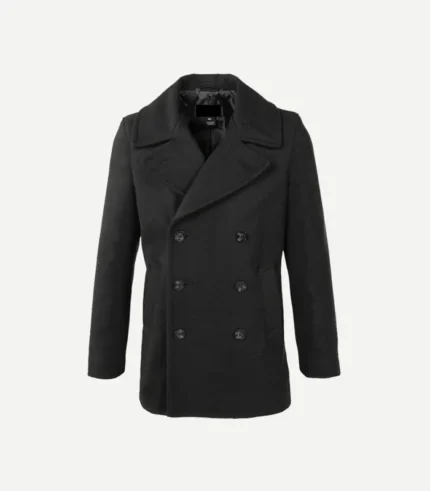
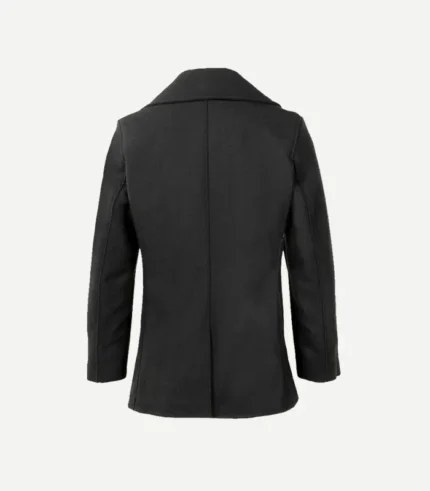
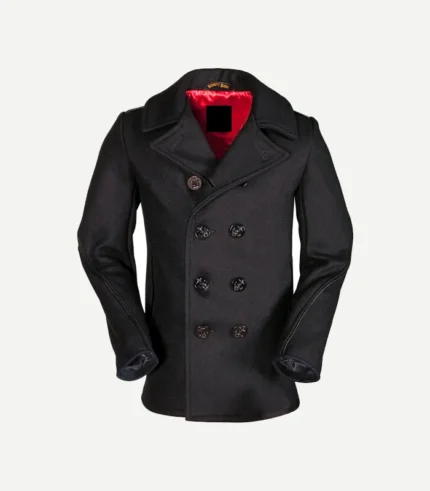
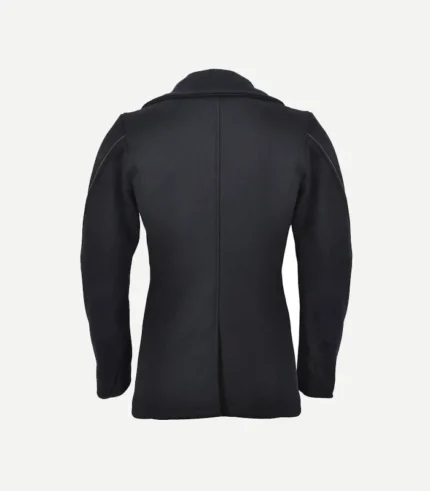
Mens Navy Trim Wool Peacoat
Original price was: $279.98.$179.99Current price is: $179.99.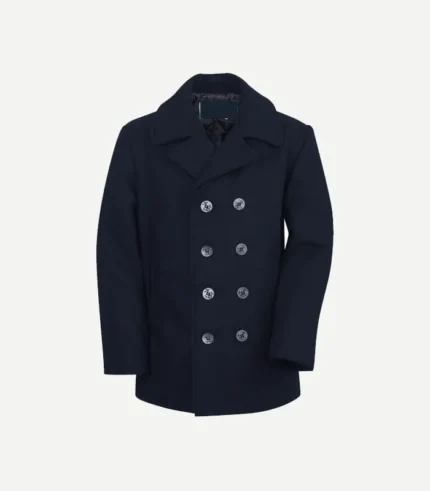
6. Fit and Sizing: Should You Size Up?
For overcoats, order your normal suit jacket size they are already cut to fit over a jacket. For peacoats, you may need to size up if you plan to wear thick sweaters underneath, but many men order their normal size for a trimmer fit.
The fit philosophy differs because the intended use differs:
- Overcoats: Designed with extra room in the chest, shoulders, and sleeves. A 42R overcoat will comfortably fit over a 42R suit jacket. Do not size up. If anything, some men size down for a more modern, less bulky silhouette but this only works if you rarely layer heavy sweaters.
- Peacoats: Traditionally cut closer to the body. If you plan to wear only a t-shirt or thin sweater, order your normal size. If you plan to layer thick cable-knit sweaters or hoodies, order one size up. At AmericanSuiting.com, we recommend checking individual size charts as peacoat fits vary by brand.
Fit Checklist for Both Coats
- Shoulders: Seam aligns with shoulder bone – no overhang, no divots.
- Chest: Button without pulling. Overcoats should have 2-3 inches of space. Peacoats should be closer (1-2 inches).
- Sleeves: Overcoat sleeves should end ½ to 1 inch below your suit jacket sleeve. Peacoat sleeves should end at your wrist bone.
- Movement: Raise your arms forward – the coat should not lift excessively. Walk up stairs – the hem should not hit the step edge.
7. Color Options: Navy, Charcoal, Camel, and Black
Navy and charcoal are the most versatile colors for both peacoats and overcoats. Camel (tan) is classic for overcoats but rare for peacoats. Black works for both but is less versatile it only pairs well with black, grey, or very dark outfits.
Best Peacoat Colors
- Navy: The classic naval color. Most versatile. Pairs with jeans, chinos, and casual trousers.
- Charcoal: More formal than navy. Works well for a peacoat worn to a casual office.
- Black: Modern and sleek. Best for evening wear or monochromatic outfits.
- Camel: Uncommon for peacoats, but possible. A statement piece.
Best Overcoat Colors
- Camel (Tan): The most classic overcoat color. Pairs beautifully with navy and charcoal suits.
- Charcoal: Most formal and professional. Hides dirt and wrinkles.
- Navy: Practical and versatile. Excellent for travel.
- Black: Dramatic and formal. Best for evening events or creative professionals.
8. Price Comparison: What Should You Expect to Pay?
Quality peacoats range from $150-$400. Quality overcoats range from $250-$800. At AmericanSuiting.com, our overcoats are priced between $200-$400 the sweet spot for 100% wool construction without luxury brand markup.
Peacoats are generally cheaper because they use less fabric (shorter length) and are often made from melton wool, which is durable but less expensive than finer wools used in overcoats. Overcoats require more fabric (2+ yards extra) and often use higher-grade wools like Super 100s or cashmere blends.
Avoid both coats under $100 they will use synthetic blends (polyester, acrylic) that pill, don’t breathe, and won’t keep you warm. Invest in wool. A $250 wool overcoat that lasts 10 years costs $25 per year that’s excellent value.
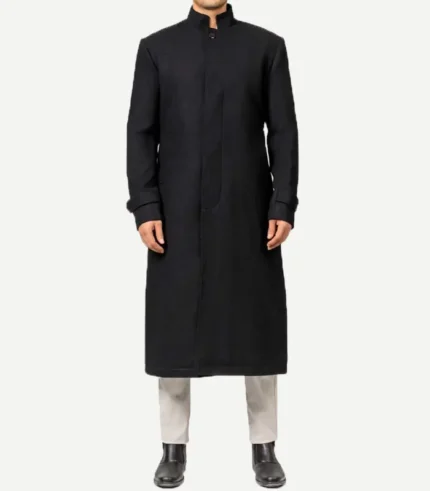
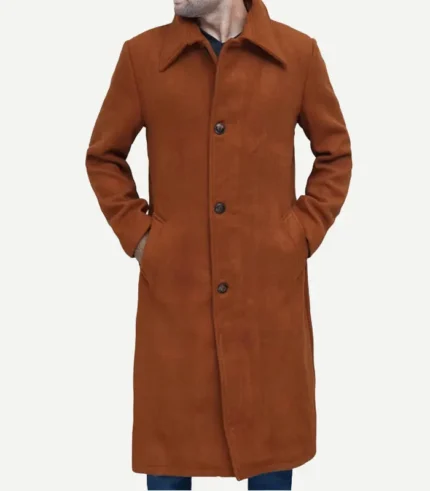
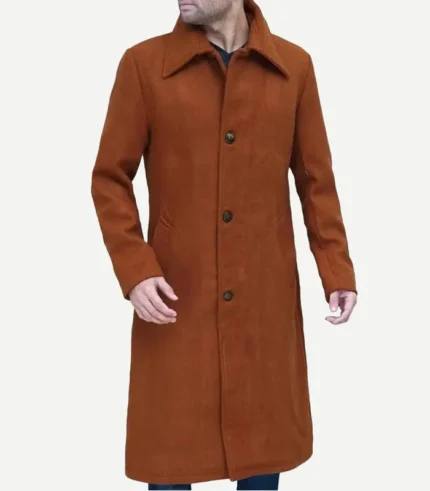
Trenton Tan Long Wool Overcoat
$179.00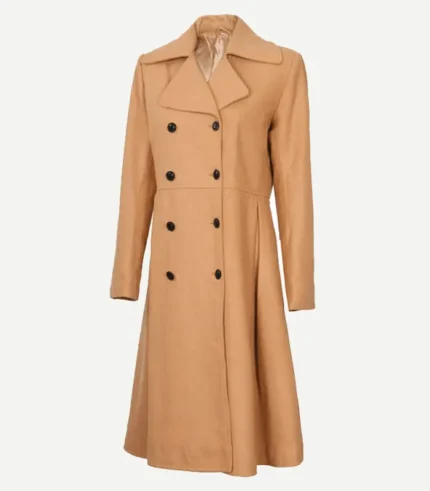
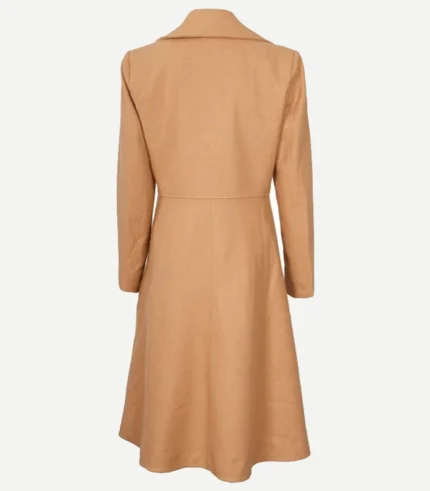
Women’s Beige Double-Breasted Wool Overcoat
Price range: $189.99 through $219.999. Peacoat vs. Overcoat: Direct Comparison Table
| Feature | Peacoat | Overcoat |
|---|---|---|
| Length | Hip to upper thigh (26-30″) | Knee or longer (38-44″) |
| Closure | Double-breasted (6-8 buttons) | Single or double-breasted |
| Lapels | Wide, notch, can turn up | Peak or notch, often velvet collar option |
| Fabric weight | Heavy (600-800 GSM) | Medium to heavy (500-800 GSM) |
| Formality | Casual to smart-casual | Formal to semi-formal |
| Best worn over | Sweaters, henleys, t-shirts | Suits, blazers, dress shirts |
| Warmth | Very warm (dense wool) | Warm to very warm (with layering) |
| Price range (quality) | $150-$400 | $250-$800 |
| Best for | Weekends, casual dates, travel | Business, weddings, formal events |
| Can wear over suit? | No (too short) | Yes (designed for it) |
10. Which One Should You Buy First?
If you wear suits regularly for work or formal events, buy an overcoat first. If your life is more casual (jeans, chinos, casual office), buy a peacoat first. Ideally, you will eventually own both they serve completely different purposes.
Here’s a decision flowchart to help:
- Buy an OVERCOAT first if:
- You wear a suit to work at least 2-3 times per week
- You attend weddings, funerals, or formal events regularly
- You want to look authoritative and professional in winter
- You live in a colder climate (below freezing) and need coverage
- Buy a PEACOAT first if:
- Your office is casual or you work from home
- You rarely wear suits
- You want a coat for weekends, errands, and casual dates
- You prefer a shorter, more mobile silhouette
- You’re on a tighter budget ($150-$250 range)
At AmericanSuiting.com, we recommend starting with a charcoal or camel overcoat if you’re a professional in your 30s or 40s. For younger men or those with casual lifestyles, start with a navy peacoat.
11. Can You Own Both? Absolutely.
Yes many men own both a peacoat and an overcoat because they serve different purposes. The overcoat is for formal and business occasions. The peacoat is for casual and smart-casual occasions. Together, they cover every winter situation from black-tie galas to Saturday morning coffee runs.
If you can afford both, this is the ideal winter outerwear wardrobe:
- Overcoat (camel or charcoal): For suit days, weddings, interviews, and formal events
- Peacoat (navy): For weekends, dates, travel, and casual offices
- Casual parka or bomber: For extremely cold days or active wear (optional)
With these three coats, you’re prepared for any winter occasion. At AmericanSuiting.com, we currently offer overcoats check our outerwear collection.
12. Care and Maintenance for Both Coats
Both peacoats and overcoats require dry cleaning only once per season unless visibly soiled. Between cleanings, brush with a garment brush to remove dust and lint. Store on wide wooden hangers in breathable garment bags. Never machine wash or dry clean frequently it damages wool fibers.
Additional care tips:
- Spot clean spills immediately with a damp cloth. Pat, don’t rub.
- Remove lint with a fabric shaver or lint roller – especially important for dark peacoats.
- Air out after wearing – hang in a well-ventilated area for 24 hours before putting away.
- Moth prevention – use cedar blocks or lavender sachets in your closet. Moths love wool.
- Repair loose buttons promptly – use heavy-duty thread and sew through the button’s “shank” (the small stem on the back).
How-To: Try On a Peacoat or Overcoat (Step by Step)
Follow these steps when trying on either coat to ensure the perfect fit:
- Wear what you’ll wear underneath. For overcoats, wear your suit jacket or blazer. For peacoats, wear your thickest sweater.
- Button the coat completely. For double-breasted peacoats, button both rows. For overcoats, button all buttons.
- Check the shoulders. The shoulder seam should sit exactly at the edge of your shoulder bone no divots, no overhang.
- Check the chest. You should be able to slide a closed fist between the buttoned coat and your chest. If not, it’s too tight.
- Check sleeve length. For overcoats, sleeves should end ½ to 1 inch below your suit jacket sleeve. For peacoats, at your wrist bone.
- Check overall length. Overcoats: between top and bottom of kneecap. Peacoats: covering your seat, ending mid-thigh.
- Move. Raise arms forward, reach overhead, walk up stairs. The coat should not bind, lift excessively, or hit stair edges.
Pro tip: Have a friend take photos from the front, back, and side. It’s easier to see fit issues in photos than in a mirror.
Frequently Asked Questions
No – a peacoat is too short. The suit jacket hem will stick out below the peacoat, creating a mismatched, awkward look. Wear an overcoat over suits instead.
A heavy peacoat (700-800 GSM) is warmer than a lightweight overcoat (500 GSM). But a mid-weight overcoat worn over a suit jacket and vest is equally warm due to layering.
Yes – peacoats are timeless classics. They never go out of style. Navy peacoats, in particular, have been a menswear staple for over 100 years.
Camel (tan) or charcoal grey. Camel pairs beautifully with navy suits. Charcoal is more formal and hides dirt. Navy is also excellent but avoid wearing it over a navy suit.
Yes – a camel overcoat worn over dark jeans, a sweater, and boots is a classic smart-casual look. Charcoal overcoats are harder to dress down – they look too business-like.
Snug but not tight. You should be able to button the coat without pulling across the chest. Unlike overcoats, peacoats are cut closer to the body – a trim fit is expected.
Topcoats are shorter (mid-thigh) and lighter (400-600 GSM). Overcoats are longer (knee or below) and heavier (500-800 GSM). Overcoats are more formal and warmer.
We focus primarily on overcoats and tailored outerwear at AmericanSuiting.com. Check our outerwear collection for current offerings.
Traditional peacoats have six to eight buttons arranged in two rows of three or four. The top button is often left undone for a less rigid look.
Yes – but size up one size to accommodate the bulk. A hoodie under a peacoat creates a modern streetwear-inspired look. Avoid this for formal occasions.
